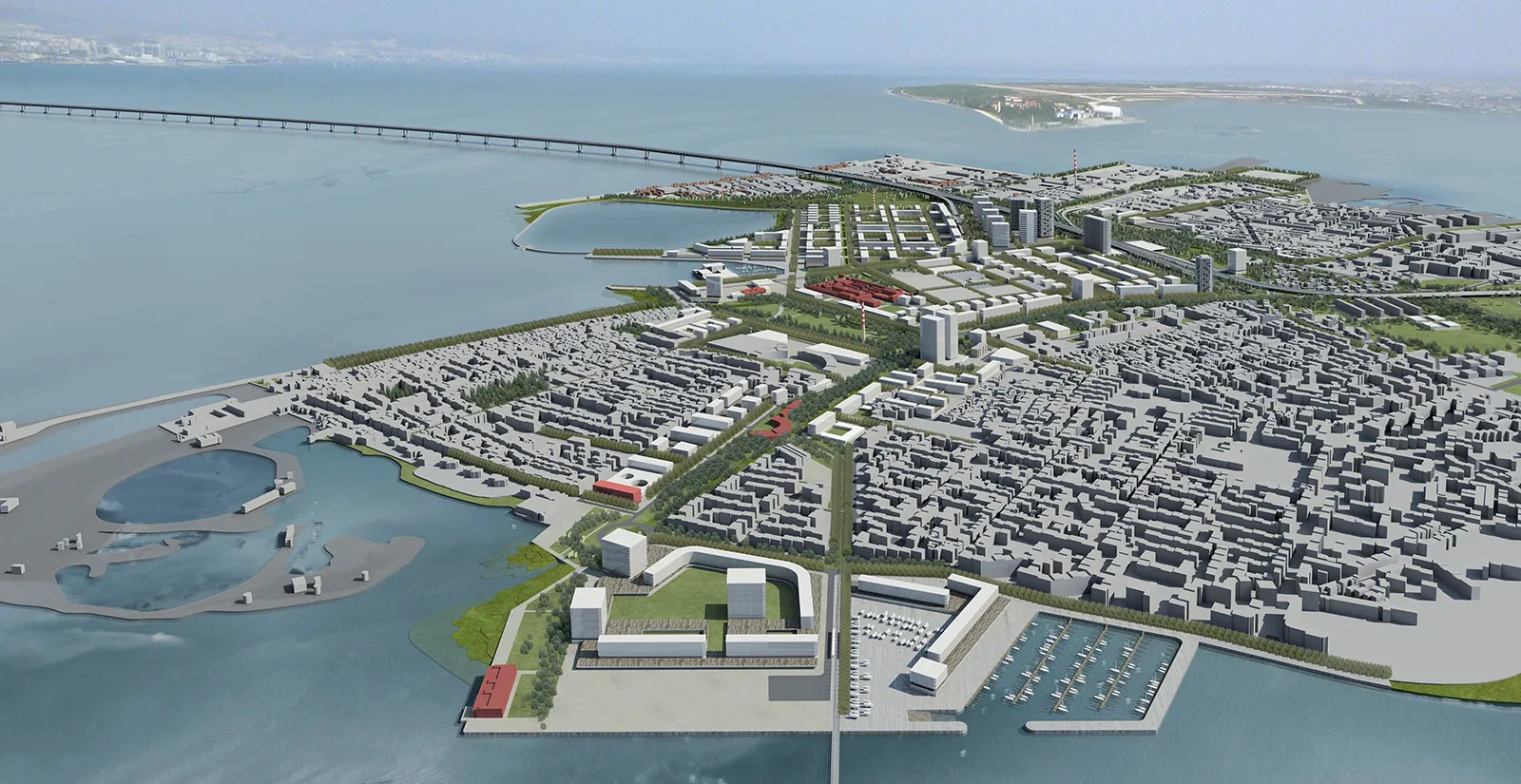
By train from Cascais to Alcochete or from Sintra to Setúbal, the new station in Lisbon: transport revolution of the third Tagus bridge
The new bridge over the river will not only connect Lisbon with the future airport and create a high-speed link with Madrid, but it will also cut travel times, bring places closer together and forge new connections within the capital region.
Announced alongside the declaration of the location for Lisbon's new airport in Alcochete, the Third Tagus Crossing («TTT») will transform how we travel around the metropolitan region.
The TTT is fundamental to the commissioning of the new airport in Alqushet, scheduled for 2034. Without the bridge, the new airport cannot survive. But that is by no means all the news.

TTT will ensure high-speed line between Lisbon and Madrid, meaning the two capitals will be three hours apart. And this will bring even more important improvements for everyone who lives and works in Lisbon and the surrounding municipalities, on either side of the Tagus.
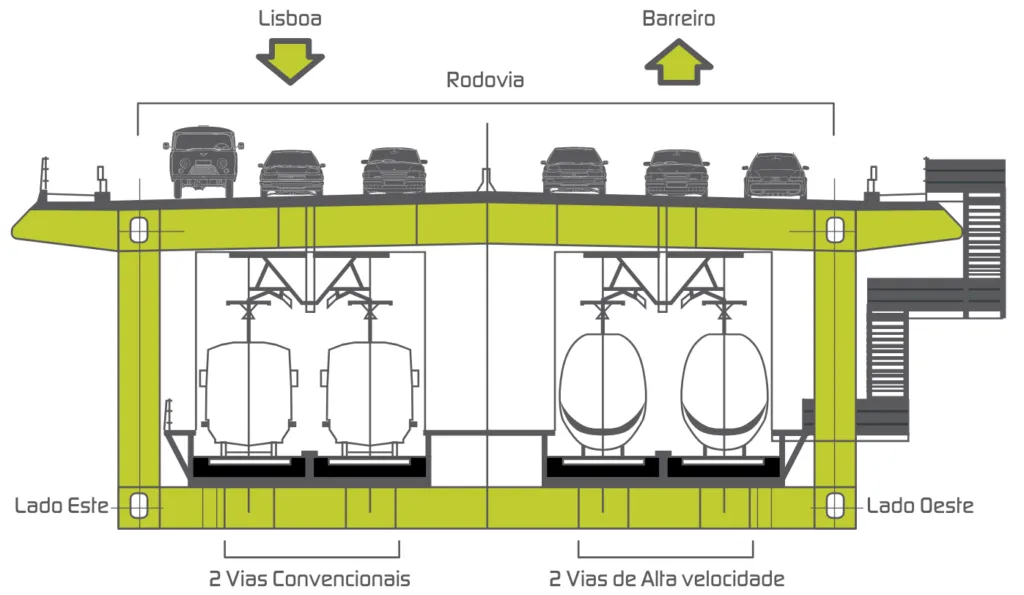
The new bridge will have four railway tracks, which twice as much as now on the 25th of April Bridge, to separate intercity high-speed traffic from local and freight traffic from the very beginning.
Will this bridge be for cars? Most likely, but that is a question that remains to be answered.
At last, the «city on two banks»?
The implementation of the TTT will make it possible to develop Greater Lisbon as a «city on two banks», according to the environmental impact study published in 2008 concerning the high-speed link between Lisbon and Moita, which includes the Third Crossing of the Tagus.
However, for TTT to strengthen the connection between municipalities on both sides, further investment in the city's railway is needed:
- Increase four times the Sintura lines between Rome-Areeiro and Braço de Prata stations;
- Connection Cascais line with the Sintra line in Alcántara.
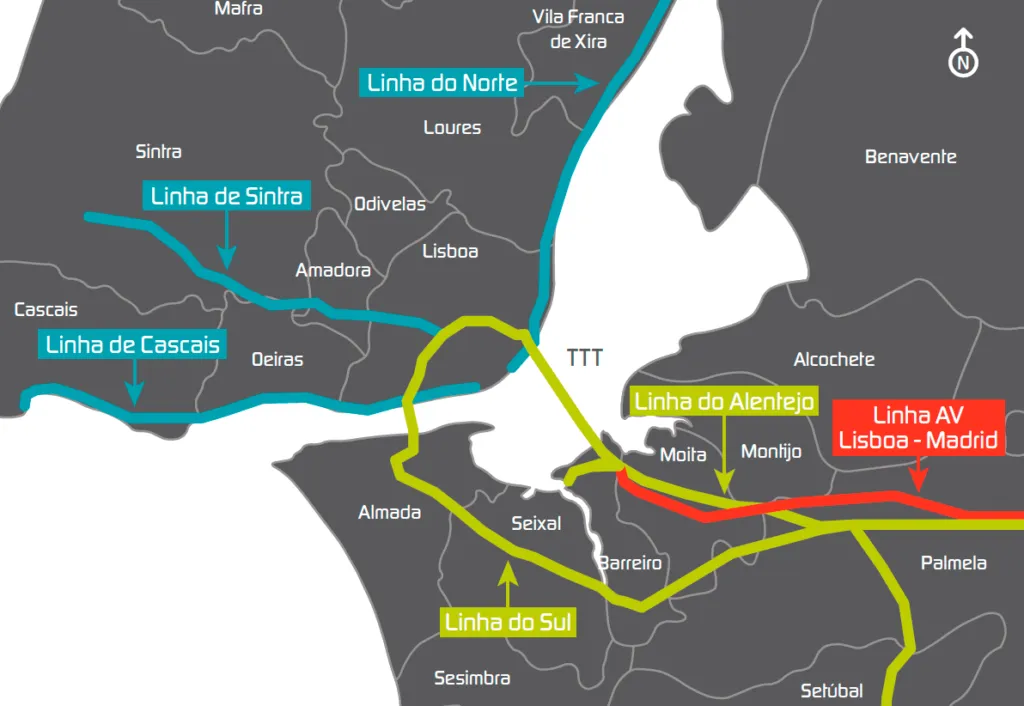
As soon as TTT and these two projects, already provided for in the 2030 National Investment Programme (PNI 2030), will be completed, it will become possible to bring about a revolution in the field of mobility in the metropolis. We are talking about direct connection between Lisbon and Barreiro and Setúbal, and the opportunities for creating direct services at the intersection of the Sintra, Cascais, Cintura, Azambuja and Sado lines.
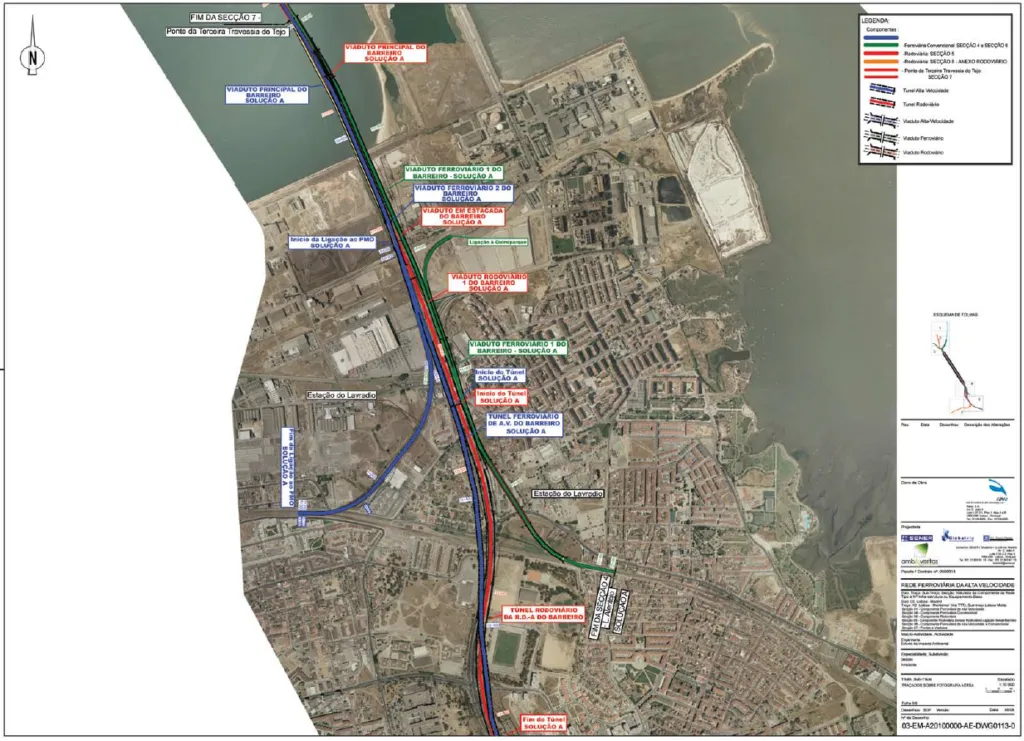
From Sintra to Setúbal, from Cascais to Alcochete
The mentioned fourfold increase of the Sintra line is important because, upon completion, it will allow it to be connected to the Cascais line. This means direct trains between Cascais and Oriente, and via the TTT, between Cascais and the future airport and even further to Setúbal.
diametrical railway service from suburb to suburb via Lisbon – in line with the European trend, just as it is organised in Paris and Madrid.
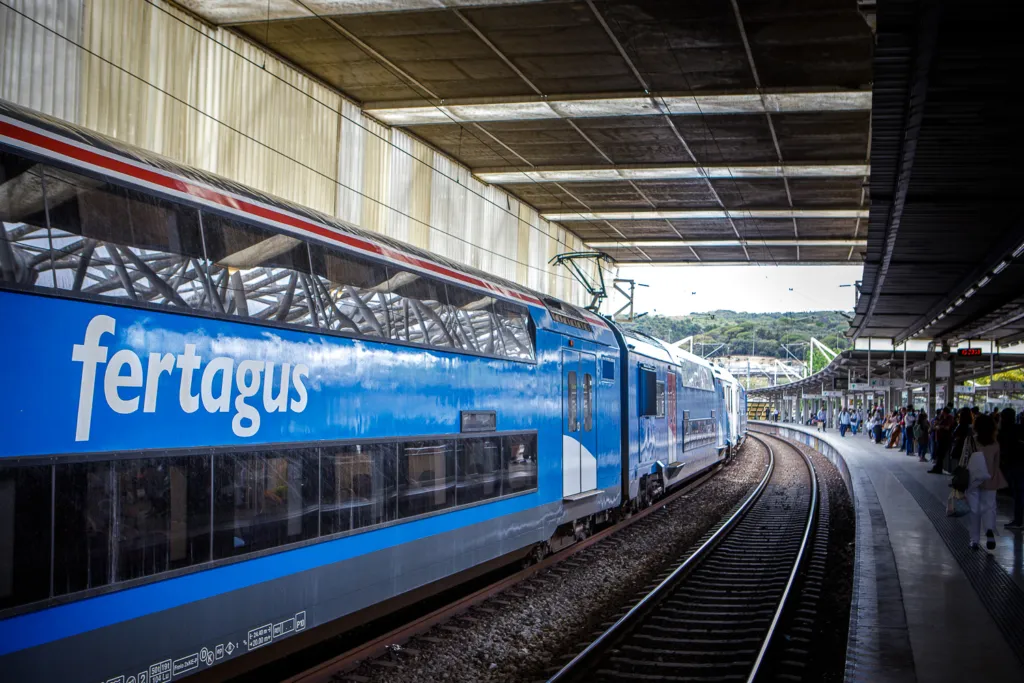
Thus, the scheduled work will make it possible to create such routes as Cascais – Alverca, Sintra – new airport or Sintra – Setúbal, passing through Barreiro and the centre of Lisbon.
A twofold acceleration
We already know that the new bridge over the Tagus will allow us to reach the Spanish capital in three hours, competing with planes. But and it will be possible to get to the Algarve quicker, reducing travel time to the south of the country by 35 minutes: the current 3-hour journey between Gare do Oriente and Faro is cut to 2 hours and 25 minutes. The trip to Beja will be 50 minutes faster (1 hour 25 minutes), and the intercity train to Évora will arrive 30 minutes earlier (1 hour and 2 minutes).
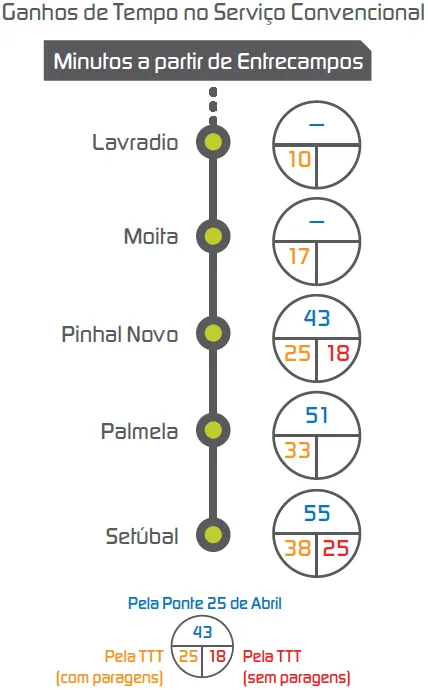
But the bridge will significantly reduce travel time not only on long journeys. Between central Lisbon and the municipalities south of the Tagus, the savings are significant:
Entrecampos – Lavradio (Barreiro):
10 minutes (currently there is no direct connection)
Entrecampos – Moita:
17 minutes (currently there is no direct connection)
Entrecampos – Pinhal Novo:
25 minutes (it is currently 43 minutes past the 25th of April Bridge)
Entrecampos - Palmela
33 minutes (currently 51 minutes)
Entrecampos - Setúbal
25 minutes non-stop or 38 minutes (currently 55 minutes)
Oriente - New Airport:
20 minutes non-stop or 30 minutes (with stops)
New station in Lisbon
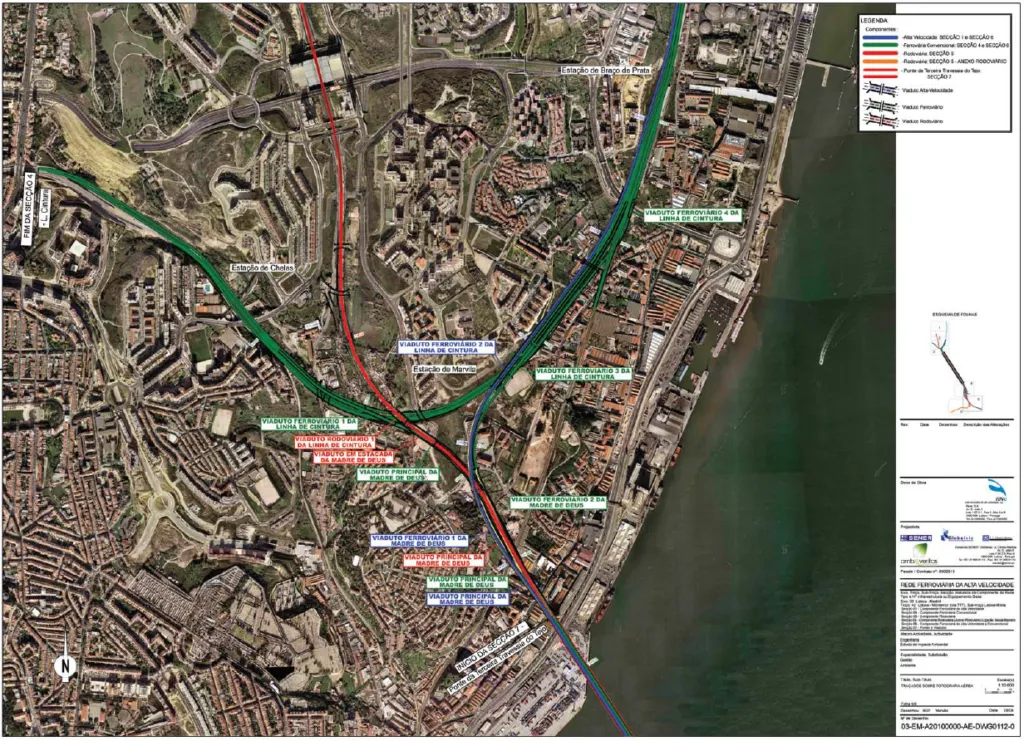
As a result of the work a new railway station will be created with access to Chelas/Olaias metro station.
For those arriving from the south bank, this will be the second station after Marvila and the first with access to the underground—Olaias station. This route will reduce the strain on the bridge on 25 April, and also at the Sete Rios and Entrecampos stations.
A new lease of life for forgotten corners
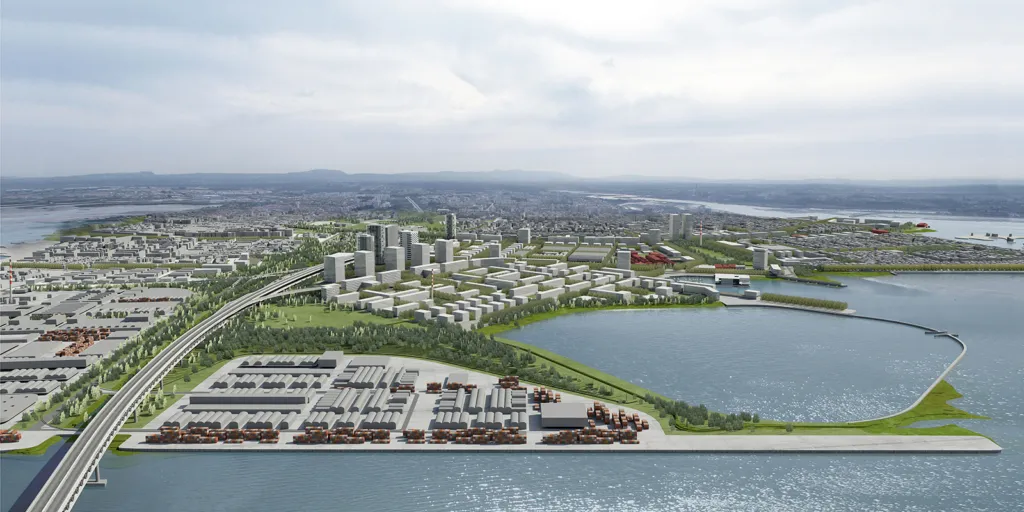
The new bridge will revitalise the Chelas and Beato districts in Lisbon, as well as the deindustrialised areas of Barreiro.
It is difficult to overstate the bridge's importance for logistics: it will help decarbonise freight transport, bypass freight restrictions on the 25 April Bridge, and improve coordination between the ports of Lisbon, Setúbal and Sines.
Toll road for cars? It depends on whether we want more cars in Lisbon
The railway is the main driver of the third crossing, but it is expected that the new bridge over the Tagus may also have a roadway. Despite this having been provided for in the studies, the function of the road has not yet been defined, and there are those who object to its necessity.
Apart from increasing the cost of the project by approximately 500 million euros, the roadway will lead to more cars entering Lisbon, at a time when the city is already experiencing high traffic levels.
As for the money: if the TTT is built for trains only, it will cost 1.7 billion euros; if there is a road surface above the railway tracks, the cost will rise to €2.2 billion.
3 hours to Madrid and the cancellation of 40/60 daily flights
Currently there are about 40 daily flights between Lisbon and Madrid with 1.9 million passengers. Plus there are 20 daily flights between Lisbon and Porto with a passenger volume of 1.1 million people.
High-speed trains will compete with the plane, and the possibility of eliminating the Porto–Lisbon or Lisbon–Madrid air bridges could be considered.
In France The measure has already been taken — in cases where the train takes less than 2.5 hours, flights cannot be operated. This year Spain announced of his intention to do the same.
Following the completion of the construction of the high-speed link between between Lisbon and Porto a direct rail service between the two cities lasting 1 hour 15 minutes.
It is still unknown how it will be financed, and whether it will be exclusively a rail crossing or also a road one, but this has been discussed for more than three decades, even before the opening of the Vasco da Gama Bridge. In 2008, the Chelas–Barreiro location was announced, but the project never moved forward. More recently, it became a fundamental part of the National Railway Plan, the environmental report of which was at the public consultation stage until March of this year.
Now, following Prime Minister Luís Montenegro's statement, everything points to the new crossing actually going ahead. The completion of the airport demands it, but there are many other reasons for the works to be finished.
Sources used research environmental impacts of the third Tagus crossing and publication A Message.