
Who is eligible for exemption from paying IMT?
IMT – the municipal tax on the transfer of immovable property for consideration, i.e. the tax payable each time there is a change of ownership of immovable property in Portugal. It is a calculated amount and varies depending on the purchase price, the applicable rate (ranging from 2 to 8%), the location and the purpose of the purchase. It is payable upon signing the property sale and purchase agreement, unless the purchaser is exempt from payment.
So who is eligible for exemption from paying IMT?
The two most common tax exemption situations relate to the value of the property and the age of the owner.
Release by price limit
This is not a concession, but a calculation on a scale, though the result will be zero if the price falls within the first bracket of the table. The property must be intended for permanent main residence, and the value declared in the deed of sale cannot exceed €92,407 on the Portuguese mainland or €115,508 in the Azores and Madeira.
Acquisition by persons aged under 35
People under the age of 35 who are buying their first home to live in are exempt from paying IMT and stamp duty. Full tax exemption applies to the purchase of property valued at up to €316,772. If the purchase price is between €316,772 and €633,453, the exemption applies only to the portion up to €316,772, whilst tax must be paid on the amount exceeding this. For purchases exceeding €633,453, exemption from IMT and stamp duty is not available.
Where two people buy a house together, if one of them already owns a house or if one of them is over 35 years of age, the tax exemption is 50%.
However, there are other grounds for exemption from IMT

Carrying out restoration work on the purchased property
If you plan to carry out refurbishment work on the property you are purchasing, you may also be exempt from paying IMT. To qualify for this exemption, the following conditions must be met:
- The property must be over 30 years old or located in an Área de Reabilitação Urbana (in Lisbon, this is practically the whole city).
- The works must be RJRU rehabilitation (not cosmetic repairs). Reinforcement or repair of load-bearing elements, floors, and roofs; complete replacement of building services; thermal and acoustic insulation, new windows with upgraded performance; compliance with energy requirements, etc.
- The condition of the building after the works must be two levels higher than the initial one and at least “bom” (good). This is assessed using the MAEC methodology. The house must meet the energy efficiency and heat requirements.
What does «+2 levels» mean?
MAEC condition scale: atrocious → poor → average → good → excellent.
was mau → need to achieve at least bom (exactly +2 levels) — ok;
was médio → need excelente (also +2 levels) — ok;
it was péssimo → +2 only gives médio, and at least bom is required, so in fact +3 is needed;
it was bom → impossible to go up by +2 (there is only one level above), such objects usually do not qualify for the relief.
The MAEC condition assessment is carried out by a technician (architect/engineer), and in Lisbon and certain other municipalities you can request a municipal «vistoria», which is carried out by the Câmara Municipal. Two assessments are thus made: of the initial condition and of the condition after the works are completed. Next, the Câmara Municipal, by comparing the before and after conditions (and taking the energy certificate into account), issues its official recognition of the rehabilitation and notifies the Tax Authority (AT) itself. It is precisely this recognition that is taken into account for EBF tax benefits.
You can obtain an exemption from IMT if you commence work within three years of the date of the transaction. In practice, IMT is often paid at the time of purchase and then refunded once rehabilitation has been recognised.

Purchase for resale
If you are purchasing a property with a view to reselling it and comply with the conditions, the purchase is exempt from IMT.
The purchase contract immediately states that the property is being acquired for resale “para revenda”. For individuals, it is compulsory to be registered as a sole trader with the economic activity code (CAE) 68100 – buying and selling of real estate. Legal entities must also hold this activity code.
In practice, the relief comes in two forms:
- Automatic upon transaction (you do not pay IMT straight away) — only if the tax authorities recognise that you are reselling goods regularly and in good standing: you must now provide a certificate from Portal das Finanças showing that you made at least one resale in each of the two previous years.
- Via a refund — if there is no «seniority» or certificate, IMT is paid at the time of purchase, and following resale within the specified period, it is cancelled and refunded upon application, accompanied by the sales contract.
To be resold:
- for 1 year for purchases from 07-10-2023,
- in 3 years (if the purchase is before 07-10-2023)
- not “again for resale” (so as not to build up a chain of releases).
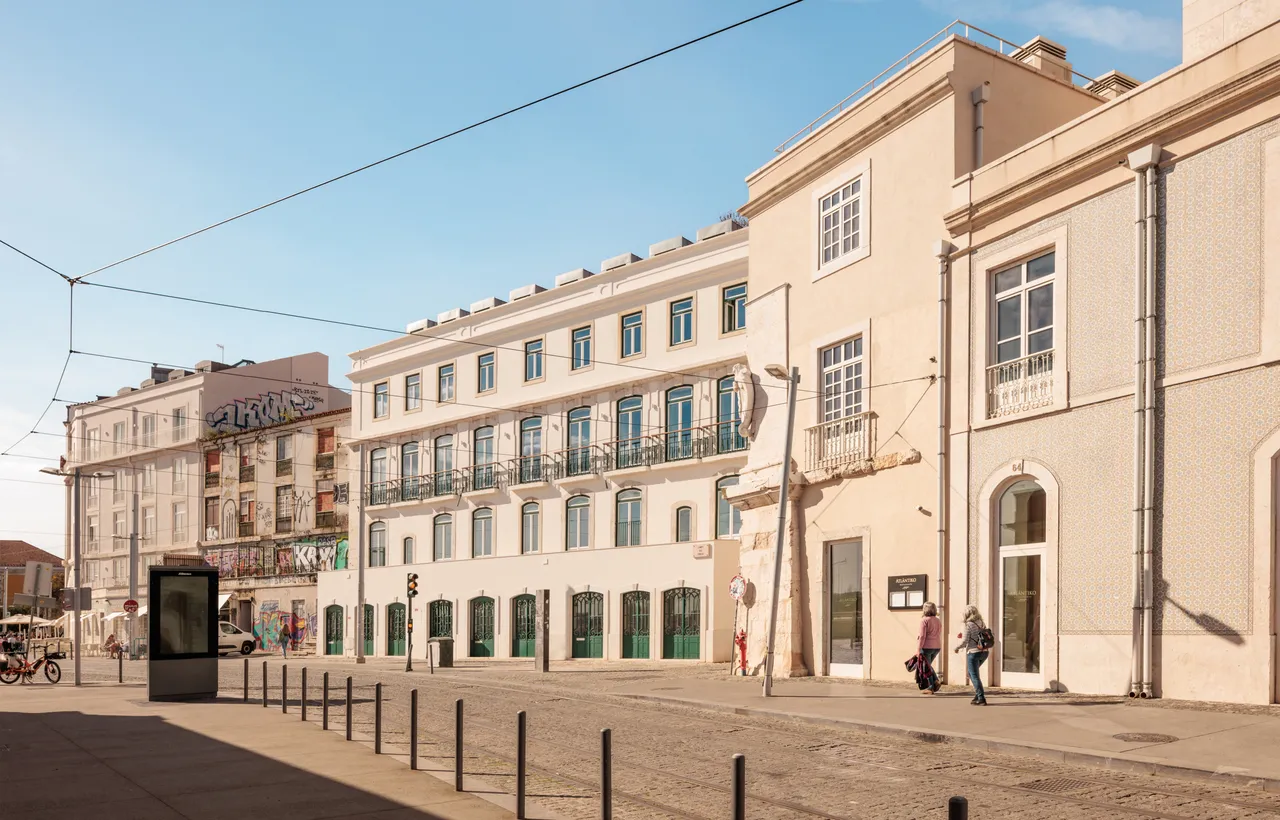
First sale after rehabilitation
This exemption from the IMT rule when purchasing property applies to the first sale following refurbishment, where the property is to be let on a long-term basis or used as a permanent residence.
The following conditions must be met:
- The building has been rehabilitated according to the rules: the building is over 30 years old or located in an ARU, recognition of rehabilitation by the Câmara Municipal (MAEC: «+2 levels» up to at least «bom» + energy requirements).
- Strictly the first sale after completed and recognised rehabilitation
The buyer undertakes to let the residential property on a long-term basis and sign a tenancy agreement within 1 year from the date of purchase, or undertakes to use it as their main permanent residence (only for properties located in an ARU zone) by changing registered address to AT at this address. The purpose cannot be changed for 6 years.
The property is located in an agricultural zone
To qualify for release on this ground, 2 conditions must be met
- The property must have a Caderneta Predial Rústica
- To be in the forest intervention zone (ZIF)
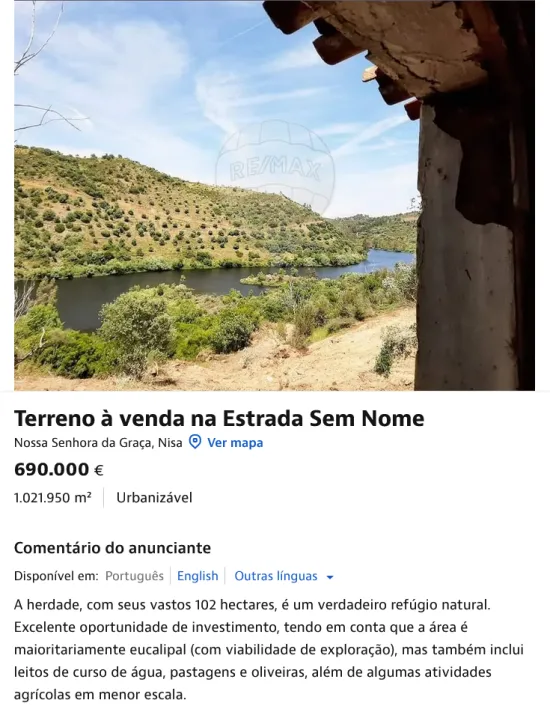
ZIF — Zona de Intervenção Florestal (forest intervention zone / collective forest management zone) — a consolidated area comprising forest plots with a single managing organisation and a single work plan. When purchasing forest land within a ZIF zone, in many cases there is a full exemption from IMT and stamp duty upon acquisition, and, in most cases, relief from IMI (annual property tax). This is complemented by municipal and national support programmes, thanks to which skilful forest rehabilitation increases the value of the asset and makes it more «marketable» in the long term.
Owners of such plots (just like all others) have certain responsibilities for the maintenance and care of plantings, ensuring fire safety and biostability, keeping access roads, water points and electricity supplies in working order. The main difference is that a ZIF has a management structure and a general work plan that you are obliged to follow, usually via a contract and with possible fees. In most cases, this is more convenient, and the larger the plot, the more noticeable the benefits.
You do not need to organise clearances and sanitary felling yourself – everything is planned and coordinated centrally; it is easier and cheaper to hire contractors through volume aggregation (discounts, machinery arrives once for the whole quarter); it is easier to comply with fire safety requirements and deadlines – there is a calendar and supervision. The cost of annual maintenance is approximately 1000 euros/hectare, and this amount can be partially or fully recovered through grants.
At the same time, the ZIF status itself does not impose any restrictions on construction; what can be built is also determined by the PDM.
Listed building.
You are exempt from paying IMT if you purchase a building or property that is individually classified as:
- Imóvel de National Interest (IIN) — property of national cultural heritage interest
- Imóvel de Interesse Público (IIP) — Building of Public Interest
- Building of Municipal Significance

Oleg Zharov
Residential and commercial property expert
Got questions? Get expert advice
in accordance with the «Regulations on the Processing of Personal Data»